Posts

Two Resources for Teaching Religion in the Classroom

Image
Here are two great resources for incorporating religion into your curriculum. One is an excellent podcast about religion called  The Classical Ideas Podcast  and the other is a terrific youtube channel about religion called  Religion for Breakfast . Classical Ideas Podcast Gregory J. Soden, a doctoral student in social studies education, hosts a podcast about religion. Some of his topics are ideal for the classroom.  For example, Episode 74 reviews the basic beliefs , practices, important people, and specific goals of the Sikh religion . His guests are two prominent Sikhs,  Dr. Harbaksh & Jasmine Sangha, and Dr. Chetan and Ranjana Hans. Another episode deals with Shintoism .   Eric Lancaster is Soden's guest.  He is an instructor of Japanese at the University of Missouri and an instructor of religious studies at Columbia College. Soden tackles Toaism in Episode 57 with Dr. Pablo Mendoza, Assistant to the President for Social Equity at Indiana Un...

Teaching Religion in World History

T EACHING RELIGION IN WORLD HISTORY Part I: THE LIMITATIONS OF BELIEF Dr. Robert Strayer Earlier this year, Dr. Robert Strayer , author of the textbook , Ways of the World , wrote a fascinating two-part reflection on the AP World Facebook page about teaching religion in world history. With his permission, I am reposting his reflections below. Dr. Strayer offers some good advice to those of us who incorporate religion into our world history curriculum. For example, he reminds us that we must remain agnostic "about the validity of the "truth-claims" in world history." And in Part II, he notes the importance of showing how religion changes and evolves over time. The heart of religious life, it seems to me, involves human interaction with an assumed but invisible realm. At least until the European Enlightenment, the assumption that such a realm existed, that there is more than meets the eye, was pretty much universal, though expressed and experienced in a great variety ...

Science Revises the Heavens: Copernicus, Galileo, Kepler

Here's the dated, but still very good, James Burke documentary, Science Revises the Heavens, from the series, The Day the Universe Changed. Burke examines the discoveries of Copernicus, Galileo, Kepler, and Newton. Some parts are terrific for class. For example, Burke does a great job of explaining the heliocentric view of the universe.

Decline of the Ottoman Empire: Short Clip from Caspian Report

Image
Here's a terrific 10-minute clip from Shirvan Neftchi for the Caspian Report about the fall of the Ottoman Empire. Neftchi notes that there was no single catastrophic event that caused the Ottoman downfall.  He notes that the empire was falling apart from the inside for centuries. The Battle of Lepanto in 1571 and the Battle of Vienna in 1683 both weakened the empire. But the decline of the Ottoman empire was very gradual and, according to this report, began with Venetian traders who, along with other European traders, put so much pressure on Ottoman guilds that the government banned Europeans from buying strategic raw materials.  This led to a large black market which eventually corrupted the bureaucracy.

The Global Nature of WWI: Two Awesome Twitter Threads

The 100th anniversary of the end of World War I has spawned a number of new resources about the war. Two of those resources remind us of the global nature of that war.  Both come from writers on twitter who tweeted the nature of the war in China and Africa I snagged both twitter threads and used a service to embed them below. My thanks to Angela Lee for tweeting both. The first comes from Eileen Cheng-yin Chow, Director of Shewo Institute of Chinese Journalism. Chow notes that although China contributed much to the war effort, including an untold story over 140,000 Chinese laborers who fought on the European frontlines beside French, Russian and British troops,  she got few concessions at Versailles. The thread includes some interesting links including a trailer for a new movie from Yellow Earth Productions called "Forgotten" that is about China during the war. Another link takes you to a fascinating National Post Story about Chinese Labor C...

European Sailors and Navigational Tools in the Age of Encounter and Exchange

Image
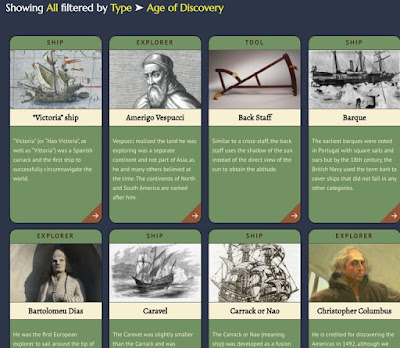
NOTE: I changed the title of this post from "European Explorers and their Tools in the Age of Discovery" to European Sailors and Navigational Tools in the Age of Encounter and Exchange. I did so because of an excellent essay by Bram Hubbell,  an AP World History teacher in New York. Hubbell notes that referring to the period between 1450 and 1750 as the age of discovery is misleading because it "implies that Europeans were the first to reach the Americas." And, notes Hubbell, Da Gamma, Magellan, and other Europeans were not really explorers,  "They were playing catch up & learning about Indian Ocean navigational knowledge that others had known for 1500 years already!" Studying European sailors in the 1500's? Here are two good resources, both of which might work for short web quests. One includes the Mariners Museum lets you explore the instruments of exploration as well the explorers by time period.  During the Age o...

Using Images in AP World History

Image
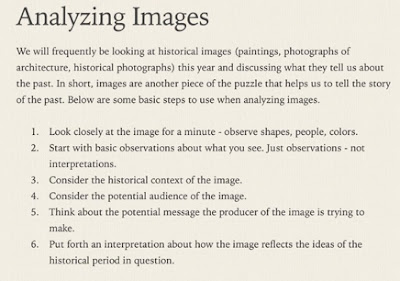
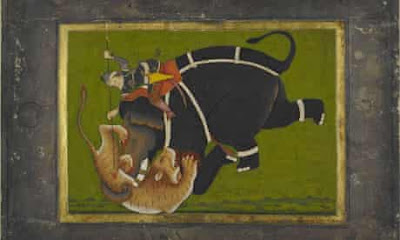
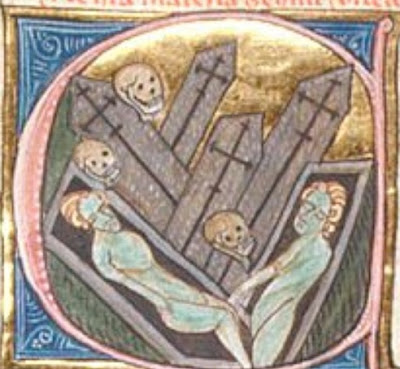
Images offer students a great way to understand history. The AP World History chat recently asked teachers to suggest images they used in their classes.  Here are a few that I snagged. Bram Hubbell tweeted the handout below for analyzing images which ask students to consider the context, audience, and message of each image. The nine images below cover all periods from post-classical to the early 20th century. The image below represents the Danse Macabre, or the Dance of Death, painted in the 16th century during the Black Death. Here's an image from the Song Dyansty scroll which shows society and urban life in Song China. Here is a 1918 image from an Indian Home Rule pamphlet. It shows the British keeping Indians off Wilson's boat of self-determination. The image below from Puck in 1899  shows Japanese perceptions of the West. The image below come s from a Chinese newspaper in China on western colonialism and the response of the Qing court.  ...

Understanding Mercantilism

Image
I'll be covering mercantilism in a couple weeks.  Here are a few resources I found. They include two video clips, an essay from the Economist, and a mercantilism simulation. The first video clip is very short, but a good overview of the basic idea behind mercantilism, more exports than imports. It's only two minutes long and good for class. The second clip comes from Tom Richey and runs 18 minutes. He adds a lot more history and context to mercantilism and ties it to absolutism. Another resource includes an essay in the Economist called, What is Mercantilism .  The author shows how mercantilist themes continue in current debates. For example, he notes that "China and Germany are often envied for their trade surpluses or seen as economic models, and China especially has very deliberately subsidised exports." Finally, here's a simulation students can play. The game includes 11 role-playing cards. Each card has a set of circumstances "that slant “your” perspect...

Ottoman Empire: Excellent Two-Part History Podcast

Image
Studying the Ottoman Empire? 15-minute History, a podcast from the University of Texas at Austin, has a terrific two-part history about the Ottomans. The first part reviews the origins of the empire and the second part considers the empire's long decline and whether the empire was truly the Sick Man of Europe by the 20th century. In addition to listening to the podcast, you can also read the transcript which might be good for students who don't have the patience for listening. The host of 15 Minute History is Christopher Rose, Outreach Director of the Center for Middle Eastern Studies and his guest for the two-part podcast was Barbara Petzen, Director of  Middle East Connections. The podcast includes a link to a primary source collection about the Ottoman Empire from Primary Source.  You can read, for example, about the devshirme system in a short document called " The Tribute of Children, 1493. "

Mughals: Art and Tolerance

Image
In this 2012 review of Mughal art, William Dalrymple offers a terrific portrait of the Mughal emperors -- Akbar, Humayun, Jahangir, and Shah Jahan. All four promoted and patronized art.  That art was colorful and liberal, at least by Muslim standards. Persians, for example, were scandalized by the art calling it "too ripe and rounded' and "too bright and colorful."  According to Dalrymple, that was because the art did not show the "restraint and geometric perfection of Safavid painting." The Mughal love for art and its emphasis on liberalism shows a strong humanist streak in many Mughal emperors and especially, Akbar. According to Dalrymple,  Akbar "succeeded in uniting Hindus and Muslims in the service of a multi-ethnic, multi-religious state, promoting Hindus in his civil service, marrying Hindu princesses and entrusting his army to the Rajput ruler of Jaipur." Akbar's love for art included religious Christian art like frescoes of Christain...

The Map That Guided Columbus

Image
Wow! The first map below is very likely the one that Columbus used to chart his voyage to Asia.  And the second map shows Europeans what America looked like after the voyage of Columbus and Vespucci. It shows the existence of the Pacific Ocen for the first time. Here's the story about the first map , the one Columbus probably used, from Wired Magazine. And here is a story about the second map , the one that was made after Columbus returned. It's from the Smithsonian Magazine. the first map was made by Henricus Martellus, probably in 1491.

Ibn Battuta: Lesson Resources

Image
Studying Ibn Battuta?  Here are some interesting resources. Here is a short clip from Kjvids. It's just music, images, and script but does a good job of reviewing Battuta's travels. And here is a link to a longer documentary called " The man who walked across the World: The Adventures of Ibn Battuta" (Part 1) along with video questions . The Silkroad website has a good review of Battuta's travels as well as resources on the Silk Road from the spread of Buddhism to the Mongols. Reading Assignments Here are some interesting reading assignments for Ibn Batutta. The Indian ocean. org website includes travelers like Marco Polo and Ibn Battuta in its medieval era map. Here is a WebQuest  that asks students to read about Battuta in different locations. Saudi Aramco World has an excellent feature about ibn Batutta called "The Longest Hajj." Here is an assignment based on some of the Batutta writings, especially those in Africa. Students use the University ...

Why Did Europeans Enslave Africans? Great Video Overview

Image
Here's an excellent overview of the origins of the slave trade from Danielle Bainbridge, for The Origin of Everything, a YouTube series from PBS Digital Studios. It runs for just 9 minutes.   

Bantu Migrations: Resources

Image
Here are three good clips about the early Bantu migrations, a New Visions for Public Schools activity about early Africa, and a terrific site about iron in Africa. One video clip comes from Masaman, who produces a number of educational videos on his YouTube channel .  He does a good job of explaining the groups of people who lived in Africa before the Bantu migrations and the changes the Bantus brought, especially in terms of language. Khan Academy produced the second clip . The first four minutes of this clip clearly explain the causes and effects of the migrations. The second four minutes review the Polynesian migrations. The third clip about the Bantus comes from Guns, Germs, and Steel. It runs about six minutes and concentrates on the diversity of Bantu languages. In addition to the video clips,  New Visions for Public Schools has an excellent activity for understanding the African kingdoms of Ghana, Mali, and Songhai and the influence of Islam on the...

Awesome World History Podcasts: From Neolithic to Contemporary

Image
Here's a series of great podcasts about world history from Emily Glankler, an AP World teacher in Texas. You can listen to the podcasts at her site, Anti-Social Studies  or on Apple Podcast, Spotify, and Stitcher. Season 1 episodes begin with the Neolithic period and go all the way to the Contemporary period. Each episode lasts 30 to 40 minutes and all seem to be engaging and fun. Check out this episode about the Early Modern Period in the East. Glankler begins with the Ming dynasty and Zheng He and then moves to the Gunpowder empires. Next, she examines Africa and the slave trade. These podcasts might make for great topical reviews for students.

Rap Songs about Early World Units, from Mesopotamia to Middle Ages

Image
Introduce your unit with music! Mr. Nicky, who performs at schools around the country, has a Youtube channel with short engaging songs about early world history from Ancient Mesopotamia to the Middle Ages. Here's one from ancient India. And here's one from ancient Egypt.

Columbus: Hero or Villain? History Buffs Review 1492: Conquest of Paradise

Image
Studying Columbus?  Here's a great clip that might help students understand what really happened when Columbus set sail for Asia. History Buffs, a group that reviews the historical accuracies of historical movies, rip apart Ridley Scott's 1992 film called "1492, Conquest of Paradise." They argue that Scott romanticizes the conquest of America and attempt to explain why Columbus does not deserve to be celebrated but should instead be condemned.  The review is engaging and only 20 minutes. 

Martin Luther & the Reformation: Animated Clip from National Geographic

Image
Here's a terrific short (about 5 minutes) animated introduction to Martin Luther and the Reformation from National Geographic. Thanks to my colleague, Heather O'Grady, for the link.

East India Company & Privatizing War in Afghanistan

Current events and history came together last week when President Trump first talked about privatizing the war in Afghanistan. Erik Prince, founder of Blackwater, an American private military company, suggested that his company could handle the war in Afghanistan more cheaply than the government and pointed to the British East India Company as an example . Some writers reminded readers that the East India Company was involved in colonization. Historian Ali Olomi, a scholar of Middle East and Islamic history and the host of a history podcast called Head on History , tweeted a fascinating history of the East India Company in Afghanistan. World History students might enjoy the short history and its tie to current events. I used a thread spooler to embed the tweet thread which is why its subscription advertising is so prominent. Thread by @aaolomi: "Disturbing development: Trump is considering Erik Prince’s proposal to privatize war in Afghanistan for a while. If he does so, all pret...

Revise What You Teach about the Black Death

Image
Professor Monica Green, a specialist in medieval European medicine at Arizona State University, argues that we should change the way we teach about the Black Death. ( pdf copy here ) She lays out four new "truths' about the Black Death that she believes should be taught in middle and high schools. Genetics has given us a "unifed evolutionary history" of the plague. The Black Death was probably more devastating than previously imagined Sources are not always reliable The Black Death never ended. Professor Green challenges William McNeil's argument that the plague spread from southeastern China to the Crimea in the decades between the 1330's and 40's. She notes that McNeil's map that you can find at World History for Us all and in some AP World textbooks is wrong. New evidence shows that the "s trains involved in the two areas would likely have had no direct relationship, other than both being the result of centrifugal spread out of a central Euras...